
The Connection Between Language Learning and Empathy
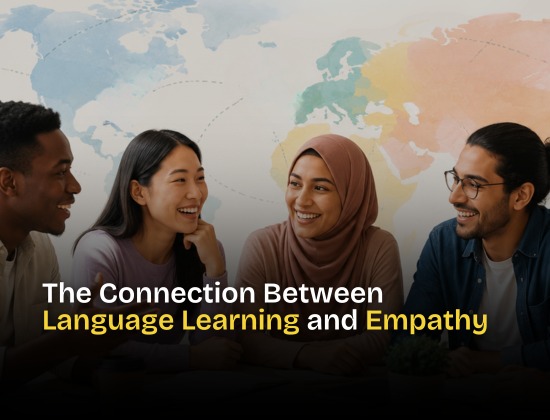
Language learning and empathy have a profound relationship that is often overlooked. When you choose to learn a foreign language, you are doing a lot more than just memorising vocabulary or grammar rules — you are entering someone else's world: their culture, their way of thinking, their emotional landscape. Research increasingly shows that the benefits of learning a new language go far beyond communication, into emotional intelligence, compassion, and human connection.
In this article, we look at how language learning encourages empathy, and why it might be one of the most powerful tools for developing multilingual communication skills and a deeper understanding of others.
What Is Empathy, and Why Does It Matter?
Empathy is the capacity to understand and share the feelings of another — the act of truly seeing the world through someone else's eyes. In today's increasingly multicultural societies, empathy through language learning has never been more important. Being able to connect authentically across cultural and linguistic divides is a skill highly valued by employers, educators, and communities.
Language and emotional intelligence are intimately entwined. The words we use influence our thinking, and learning a new language exposes us to ways of expressing emotion that may not exist in our native tongue. Concepts like the German “Schadenfreude” or the Japanese “Mono no aware” reveal emotional nuances that reshape our view of human experience.
How Learning Languages Develops Empathy
1. Perspective-Taking Through Cultural Understanding
One of the most profound benefits of learning languages is perspective-taking. Learning a new language requires you to view the world from the perspective of a different culture — understanding the culture is part of the package. You start to see why certain phrases exist, what values they reflect, and how history has shaped the way a people speak.
Learning Spanish, for instance, means coming to terms with personalismo — a cultural focus on personal relationships over institutional rules. Learning Japanese introduces you to tatemae and honne, the difference between public and private feelings. These concepts broaden not just vocabulary, but capacity for empathy.
2. Communicating with Vulnerability & Humility
Learning a foreign language is an exercise in vulnerability. You will make mistakes, trip over pronunciation, and sometimes fail to say exactly what you mean. This experience of imperfection generates a distinct kind of empathy — language learners tend to be more patient, more attentive, and less judgmental toward others communicating in a foreign language, which are key qualities of empathetic interaction.
This humility shows up in everyday social behaviour too. Multilinguals are often praised for listening more carefully, adapting their communication style to their audience, and showing greater sensitivity to social cues — all critical elements of strong multilingual communication skills.
3. Literature, Stories, and Our Shared Humanity
To engage with a language is to engage with its literature, music, films, and folktales — the emotional history of a people. Reading a novel in its original language, or listening to a song without subtitles, carries an intimacy that translation can't quite replicate. This deep immersion develops empathy through language learning: learners don't just understand the emotions and experiences of others, they begin to feel them.
The Cognitive Connection: Language, Empathy, and Emotional Intelligence
Researchers have found strong evidence that bilingualism and multilingualism are associated with improved theory of mind — the cognitive capacity to attribute mental states to others. Children raised with several languages tend to grasp earlier that other people can hold different perspectives and beliefs. That cognitive advantage is the foundation of empathy.
There's also a link between language and emotional regulation. Multilinguals often report that expressing emotions in a second language creates a psychological distance that allows for more reflection — meaning language learners may develop healthier emotional processing patterns that lead to more thoughtful, empathetic responses in social situations.
Real-World Benefits of Language Learning and Empathy
- In the workplace: Multilingual employees show a higher capacity for cross-cultural cooperation, conflict resolution, and leadership.
- In education: Students who study foreign languages demonstrate stronger social awareness and prosocial behaviour.
- In healthcare: Bilingual medical professionals often build trust more easily with patients from different backgrounds.
- In personal relationships: Language learners frequently report relating more meaningfully to people from other cultures.
Practical Ways to Learn a Language and Build Empathy
- Practice with native speakers: Conversation exchange programs build real human connection alongside language skills.
- Explore local media: Films, podcasts, and books in your target language expose you to authentic cultural narratives.
- Study untranslatable words: Words with no direct English equivalent offer unique emotional and cultural insight.
- Travel or volunteer: Immersive experiences accelerate both language learning and cultural understanding.
Conclusion
The connection between language learning and empathy is deep and well-documented. Learning a foreign language doesn't just make you a better communicator — it makes you a more understanding, compassionate, and emotionally intelligent human being. In today's highly connected world, the benefits of language learning that foster empathy and cultural awareness matter more than ever. Whether you're a student, a professional, or a curious lifelong learner, investing in a new language is investing in a richer connection with humanity itself.
Frequently Asked Questions
Q1. What is the relationship between language learning and empathy?
Learning languages increases empathy because it exposes learners to other cultures, values, and ways of thinking. Understanding a language means understanding the feelings and communication of a person, which naturally leads to higher emotional intelligence and compassion.
Q2. How can learning a new language help you grow as an individual?
Learning a new language offers many benefits, including improved memory, better multitasking, increased cultural sensitivity, more empathy, and greater career opportunities. It enhances emotional intelligence and opens doors to global friendships and collaborations.
Q3. Does learning a foreign language make you a better communicator?
Yes. Foreign language learning enhances listening skills, boosts conversational flexibility, and increases awareness of non-verbal cues. Cross-language and cross-cultural communication skills make you a better, more empathetic communicator in any situation.
Q4. How does language help you understand culture in everyday life?
Language as a means of cultural understanding helps you behave with more respect and awareness across social situations. It reduces misunderstandings, improves relationships, and helps you work more effectively with people from different backgrounds.
Q5. Is there a scientific link between language and emotional intelligence?
Yes. Research has found that multilingual people tend to have better theory of mind, stronger emotional regulation, and greater empathy. Switching between languages trains the brain to hold multiple perspectives simultaneously.